Irenic Thoughts

Irenic. The word means peaceful. This web log (or blog) exists to create an ongoing, and hopefully peaceful, series of comments on the life of King of Peace Episcopal Church. This is not a closed community. You are highly encouraged to comment on any post or to send your own posts.

8/26/2009

Out of Death, New Life

Church of the Intercession in New York City

Jay Hildebrand wrote a column for Episcopal Life Out of Death, New Life in which he describes being baptized 51 weeks after the death of his wife of 26 years. He writes in part talking about going to church after her death and what transpired following,
I had no idea what went on in church. In fact, I had only been to church for weddings and funerals. Having been raised Jewish, I had very little contact with Christianity. As the organ started playing, colored light streamed through the stained glass window and I felt a strange sensation. The smell of incense wafted through the air and the congregation started singing.

Things seemed to be different this time. There was no impatience, no feeling like I wanted to run out the door. It was replaced by a peaceful calm feeling. After five months of purgatory, it was almost intoxicating. I still had no idea what was going on, but I didn't care. I just closed my eyes and absorbed the feeling. Maybe it was the words being spoken, maybe it was the hymns, I didn't know. Or, as I have come to feel, maybe it was my wife's spirit. All I knew was I was supposed to be there. I just drank in the feeling.

Some members of the congregation showed me the hymnal and Book of Common Prayer. I must have looked like a fish out of water. In all of this, I realized that I had come home and found a piece of my heart in the church. Maybe it was something that was always missing. I knew I had to find that out.

I went to see Nora afterwards and we talked for about a half an hour. I started going up on Thursday mornings and going to church on Sundays. I felt connected. It was a totally new feeling, but the Sunday part was difficult. Even though I had abandoned Judaism long ago, it was still very difficult to accept that I was going to church.

Since my youth, I had always believed in God, but I always thought religion was for other people, not me. As I started reading the services, I couldn't believe how much Judaism was in them. It made me feel connected to the readings and the church. The more I read, the more I wanted to read. Nora recommended the Rev. Jerry Keucher as a tutor, to help me read and understand the Bible.

When I started reading the Bible, I began with the Old Testament and moved to the New Testament. I started to learn Judaism. In fact, I learned more Judaism than I ever knew. When I began to read the gospels, I was amazed. Jesus' teachings and philosophy were things I already knew. I had accepted these principles a long time ago. I began to feel a sense of rebirth and purpose. I wasn't happy, but I was peaceful. Whatever had directed me there had given me a purpose and I knew what it was.

I would be baptized and accept all the things I learned and realized. I knew I was changing. I could also put away the Vicodin. It no longer held any meaning.
The full text of his reflection is online here: Out of Death, New Life.

Labels:

1 Comments:

  • At 8/27/2009 3:47 AM, Blogger Anders Branderud said…

    In the article it is written: “Life has a sacred purpose and we are here for a reason. We may not always understand why or what to do, but there is a purpose. Belief helps to be that guide. Even in death, my wife gave me a gift. It was the gift of life. It took Nora, Jerry and the church, along with my wife, to show me.”

    (le-havdil), I want to discuss the issue of purpose of life?

    The purpose of our life is outlined in Tan’’kh ; and was also taught by Ribi Yehoshua. The first century Ribi Yehoshua from Nazareth (the Mashiakh; the Messiah) taught in accordance with Tan’’kh the only way to live in the purpose of our life. This way is found both in Torah and in Ribi Yehoshuas teachings found in our website – http://www.netzarim.co.il

    Anders Branderud


Post a Comment

<< Home

4/03/2009

Resurrecting Easter

Solange De Santis writes in an opinion piece for Episcopal Life
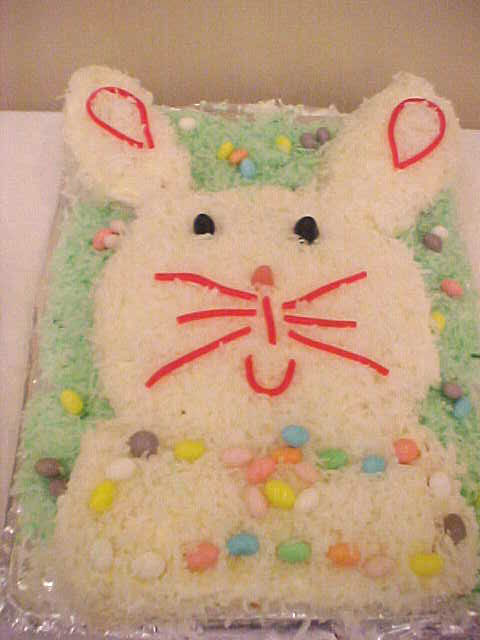
Between Valentine's Day and St. Patrick's Day (lesser religious retail holidays), the avalanche of Easter tackiness arrives to crowd store shelves and nestle next to the checkout counter....The Easter bunny myth hasn't solidified as well as Santa Claus' Christmas Eve trip, but banners, posters and decorations feature the frantic rabbit who in some vague way arrives to fill baskets with goodies. Near the cards, stuffed animals seem to hop and bleat and twitter and tweet all around.
She goes on to conclude,
Like Christmas, Easter—when stripped of its religious meaning—has become an all-purpose seasonal festival. Perhaps those not interested in faith could call Christmas Winterfest and Easter Springfest. Then Santa Claus and presents could replace Jesus and the Eucharist, and bunnies and chocolate could replace the cross and Resurrection.

Comedian Jerry Seinfeld's TV show suggested an all-purpose substitute for Christmas or Hanukkah called Festivus, which would feature the "airing of grievances and feats of strength." Better yet, combine faith traditions. The clunky word "Chrismukkah" already exists to describe a melding of Christmas and Hanukkah. So, since Passover often arrives at about the same time as Easter, perhaps we need Eastover? Passter? Easier to pronounce than Chrismukkah, surely.

Beyond the stores, and refusing to give in to a vernal version of "bah, humbug," we rejoice in a riot of color and joy. Who does not wish to greet the season of rebirth with fresh, pastel colors and a pot or two of ridiculously gorgeous lilies?

Happy memories for both parent and child arise from Easter egg-coloring sessions. People still dress up for the day at church services, where more smiles seem the norm.

How much deeper and more satisfying the celebratory aspect of Easter becomes, though, when the journey includes Lent and Good Friday, the observances that don't lend themselves quite so easily to the greeting-card culture.

One view holds that Lent and Good Friday, with their emphasis on denial and discipline and meditation on Jesus' suffering, are religious "downers." Yet no one would argue that suffering exists in this world—especially in this time of economic pain. How easy it is to feel helpless in the face of such enormous needs.

The Easter journey of faith, from darkness and death to salvation and Resurrection, gives balm to the soul. It reminds us of the promise of new life and hope, despite our current hardships. Easter says that sin is not eternal; that even death has no power. At a very human level, it tells us that change is possible in our own lives and spirits when we may be walking down a destructive path. Christians are a Resurrection people.
The full text of her reflection is online here: Resurrecting Easter

Labels:

1 Comments:

  • At 4/03/2009 8:57 AM, Anonymous Kelly said…

    Never got into the cutesy bunnies, fluffy chicks, and especially PASTELS! OK, I got into the chocolate, but not just during Easter. :)

    Yes, of course, my kids have done a few egg hunts, but not before living through Lent, doing the Stations of the Cross and learning to appreciate what the season is truly about.

    I admit, that when they were very young, I did try to enforce the Easter bunny myth (lie), but they didn't fall for it. Zachary, at age three said, "You expect me to believe that a giant bunny is coming to our house? PUhleeeeze!"

    So, I went with the TRUTH about the Easter season and what we should actually be celebrating and appreciating.


Post a Comment

<< Home

3/09/2009

A Greedy Pursuit

Solange De Santis write of American sins in a column for Episcopal Life saying in part:
One of the founding American documents, the Declaration of Independence, famously proclaimed that among the inherent rights of all were "life, liberty and the pursuit of happiness."

Solange De SantisWho doesn't know that phrase? Yet how truly revolutionary/unique it is among national manifestoes.

Canada's constitution promises "peace, order and good government." France's extols "liberty, equality, brotherhood." This nation, however, makes a search for "happiness" part of its national persona.

The declaration's ringing phrase has drawn millions of individuals to make this country their home, yet its underbelly might be considered the American sin. The current economic situation must be laid at the feet of those who pursued "happiness" in the manner of Ebenezer Scrooge, described by Charles Dickens in A Christmas Carol as a "wrenching, squeezing, grasping, scraping, clutching, covetous old sinner." Notice the author doesn't call him a "banker" or a "miser."

We are in the midst of the fallout from a greed mania, beginning with the idea that ever-rising home prices would support fundamentally flawed lending practices. Greedy lenders colluded with borrowers who believed the real estate boom would support a debt-fueled lifestyle. Unscrupulous lenders found ways to trick borrowers into taking on mortgages that contained triggers that later made the debt difficult to afford. The stock market's crash has exposed "investment managers" who lied to their clients and stole their money—but the customers lined up to get returns they thought no one else could match and were, in the end, too good to be true.

No one would argue with the idea that "the pursuit of happiness" includes the desire to create a better life for current and future generations, but why should "the American dream" only stand for things—for the house, the car, the overstuffed closets?

Jesus had a fair bit to say about greed. He talked about "those who store up treasures for themselves but are not rich toward God"; about how "life is more than food and the body more then clothing."

The church has something to say about it, too, something about knowing when enough is enough, when it's time to share, when there are more important things than things, when sacrifice is called for in order to better the life of another.
The full text of her editorial is online here: The American Sin.

Labels:

1 Comments:

  • At 3/09/2009 11:39 AM, Anonymous Anonymous said…

    Could not have put it better myself. Our family has been going back to the at home activities, playing catch in the backyard, crafts, boardgames and my famous saying " lets watch something from the Wills movie gallery" I always get at look from Chris on that one. I grew up in the country with dirt and my little brother to play with. And you know what our family is close and happy and we have lots of great memories!! I think everyone should try and slow down and realize what they already have family and friends. That is what matters right?
    Just my thoughts.


Post a Comment

<< Home