Betraying Judas
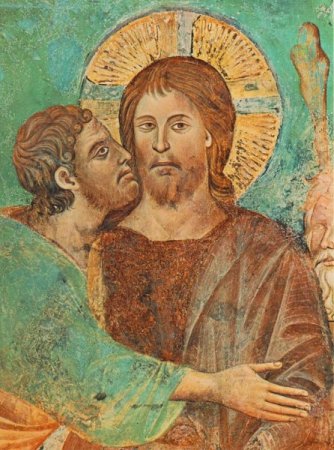 The National Geographic Society made headlines with its announcement of a Gospel of Judas which showed Judas as a good guy or even hero of the story. There were press conferences, a TV special and books. Four million viewers tuned in the first night to watch the Judas-as-hero portrayal which The Guardian newspaper in England called "a radical makeover for one of the worst reputations in history." Millions more watched the re-runs and 300,000 people bought the book. It was a huge marketing success. But as scholarly debate on the text continues, the question arises of whether the translation was determined by the need to have something controversial to market. Did scholars betray the meaning of the text before them for their 30 pieces of silver?
The Chronicle of Higher Education had a May 30, 2008 follow-up article in The Chronicle Review called The Betrayal of Judas: Did a 'dream team' of biblical scholars mislead millions?. The article tells how the translation work on the project took a particular approach and found what seemed to support that initial hypothesis of a Good Judas. The article says,
But almost immediately, other scholars began to take issue with the interpretation of Meyer and the rest of the National Geographic team. They didn't see a good Judas at all. In fact, this Judas seemed more evil than ever. Those early voices of dissent have since grown into a chorus, some of whom argue that National Geographic's handling of the project amounts to scholarly malpractice.Despite the way the ancient manuscript was reported in the media, none of the scholars ever thought the text dated to the historical person Judas Iscariot. The question was more one of what the early church thought of Judas. The scholarly consensus now emerging is that there were some serious fundamental errors in the work of translation and interpretation of the meaning of that translation that were caused by keeping the manuscript private, viewed only by a hand-picked few, rather than being made broadly available as agreed upon by the Society for Biblical Literature (SBL) back in 1991. If the SBL guidelines had been followed, more scholarly debate could have preceded the initial publication and broadcast of the work.
It's a perfect example, critics argue, of what can happen when commercial considerations are allowed to ride roughshod over careful research. What's more, the controversy has strained friendships in this small community of religion scholars — causing some on both sides of the argument to feel, in a word, betrayed.
The problem is that a slower process involving input from others was of no financial advantage to the National Geographic Society who needed a monopoly on the manuscript to profit from it. They also needed a headline grabbing angle. They got it. But now that the dust has settled, it seems that the headlines were wrong. The hype was just hype and the manuscript is not the bombshell it was presented to be. Unfortunately, no one is listening anymore. The news cycle has moved on to the next sound bite.
 I'll go back instead to an earlier report on the Gospel of Judas. In the year 180, Irenaeus, the Bishop of Lyon, published his work against heresies in which he told what he knew of Christian scripture and its origins and denounced some other works, including the Gospel of Judas. He told of a Gospel of Judas which said that Judas was one "knowing the truth as no others did." But Irenaeus was clear that he knew it not to be authentic in terms of coming from the early Christian community. He wrote that the Gnostics "bring forward their own compositions and boast they have more Gospels than really exist....no Gospel of theirs is free of blasphemy." So whatever scholarly consensus emerges on this new work, it will tell us about Gnostics who used the Christian story to bolster their teachings, but it will tell us nothing new about the Christian faith. Yet, it is still a shame that they did not promote a healthy scholarly debate ahead of publication. I am sure we could expect the same with a text that is of direct significance to the early Christian community.
The Chronicle Review article is here: The Betrayal of Judas: Did a 'dream team' of biblical scholars mislead millions?
peace,
Frank+
The Rev. Frank Logue, Pastor
Labels: Judas
posted by King of Peace @ Tuesday, June 10, 2008
0 comments


 AMID much publicity last year, the National Geographic Society announced that a lost 3rd-century religious text had been found, the Gospel of Judas Iscariot. The shocker: Judas didn’t betray Jesus. Instead, Jesus asked Judas, his most trusted and beloved disciple, to hand him over to be killed. Judas’s reward? Ascent to heaven and exaltation above the other disciples.








0 Comments:
Post a Comment
<< Home