All the Strength We Need
Below is last night's sermon. As is typical of Wednesday evening sermons, we used the readings from The Episcopal Church's Lesser Feasts and Fasts a calendar of Episcopal saints. We observed yesterday, the feast day of Dietrich Bonhoeffer, a German Lutheran pastor and martyr.
Tonight we remember a saint of our church, the German Lutheran pastor Dietrich Bonhoeffer, who was put to death by Adolph Hitler for standing against his National Socialist government. I want to begin by going back to our opening hymn and look again at the third verse. This hymn was written in the 1500s by Martin Luther, but it's words speak powerfully to the situation in which the German church found itself in the 1930s and 40s:
Though hordes of devils fill the land
All threat'ning to devour us,
We tremble not, unmoved we stand:
They cannot overpow'r us.
Let this world's tyrant rage:
In battle we'll engage!
His might is doomed to fail;
They cannot win the day.
The Kingdom's ours forever.
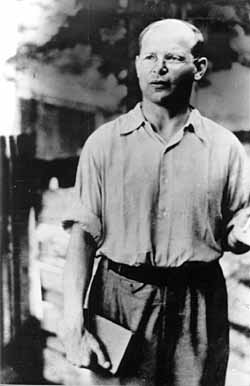
Unmoved we stand. That was Dietrich Bonhoeffer, who was one of the few to stand against Hitler's Nazi party from its earliest days. He was a leading spokesman for the Confessing Church beginning in 1933, which was the Protestant churches way to stand against the state church being created under Hitler.
Ten years into that struggle, Bonhoeffer wrote looking back on a decade of standing firm in face of evil saying,
Trust in the Lord with all your heart,
and do not rely on your own insight.
In all your ways acknowledge him,
and he will make straight your paths.
Both Bonhoeffer and the writer of Proverbs tell us that if we put our faith in God, rather than in ourselves, we will be upheld and guided. This was put to the test with Bonhoeffer's activism against Hitler's so-called Third Reich.
He had been offered a chance to work at the esteemed Union Seminary in New York. He didn't have to be in Germany at all. But he felt strongly that a German pastor must be with his people during this difficult time and returned after only one month. On his return in 1939, he became even more active in opposing his country's government. He was arrested and imprisoned. From prison he wrote,
With that martyrdom came sainthood for the German pastor. So often we see saints as so, well, saintly, that we miss their more human side. With Bonhoeffer we get to hear him wrestling with who people thought he was versus who he knew himself to be. He wrote the poem Who Am I while imprisoned by the Nazi government.
Who am I? They often tell me
I would step from my cell’s confinement
Calmly, cheerfully, firmly,
Like a squire from his country-house.
Who am I? They often tell me
I would talk to my warders
Freely and friendly and clearly,
As though it were mine to command.
Who am I? They also tell me
I would bear the days of misfortune
Equably, smilingly, proudly,
Like one accustomed to win.
Am I then really all that which other men tell of?
Or am I only what I myself know of myself?
Restless and longing and sick, like a bird in a cage,
Struggling for breath, as though hands were compressing my throat,
Yearning for colors, for flowers, for the voices of birds,
Thirsting for words of kindness, for neighborliness,
Tossing in expectation of great events,
Powerlessly trembling for friends at an infinite distance,
Weary and empty at praying, at thinking, at making,
Faint, and ready to say farewell to it all?
Who am I? This or the other?
Am I one person today and tomorrow another?
Am I both at once? A hypocrite before others,
And before myself a contemptibly woebegone weakling?
Or is something within me still like a beaten army,
Fleeing in disorder from victory already achieved?
Who am I? They mock me, these lonely questions of mine.
Whoever I am, Thou knowest, O God, I am Thine!
Struggling with the difference between the saint others thought him to be and the weary and fearful man he knew himself to be, Bonhoeffer still affirmed himself as completely God's. Here we see the real man who faced death as a consequence of following Jesus as best he knew how in a world turned more toward evil than the good. But he had said years earlier that God could and would bring good even out of the greatest evil. And good did come from those who stood unmoved against the evil that swept Europe during the 1930s and 40s. Bonhoeffer in "Who Am I" thought he did not have the strength to be the man others saw him to be.
Yet in his own death that day at Flossenburg, he did find the strength he needed to go to his death praying and praising God, never giving in to evil but continuing to stand against it. And in finding that strength when he needed it, he confirmed his own words written two years earlier:
Tonight we remember a saint of our church, the German Lutheran pastor Dietrich Bonhoeffer, who was put to death by Adolph Hitler for standing against his National Socialist government. I want to begin by going back to our opening hymn and look again at the third verse. This hymn was written in the 1500s by Martin Luther, but it's words speak powerfully to the situation in which the German church found itself in the 1930s and 40s:
All threat'ning to devour us,
We tremble not, unmoved we stand:
They cannot overpow'r us.
Let this world's tyrant rage:
In battle we'll engage!
His might is doomed to fail;
They cannot win the day.
The Kingdom's ours forever.
Unmoved we stand. That was Dietrich Bonhoeffer, who was one of the few to stand against Hitler's Nazi party from its earliest days. He was a leading spokesman for the Confessing Church beginning in 1933, which was the Protestant churches way to stand against the state church being created under Hitler.
Ten years into that struggle, Bonhoeffer wrote looking back on a decade of standing firm in face of evil saying,
I believe that God can and will bring good out of evil, even out of the greatest evil. For that purpose he needs men who make the best use of everything. I believe that God will give us all the strength we need to help us resist in all times of distress. But he never gives it in advance, lest we should rely on ourselves and not on him alone. (this and all quotes are taken from Dietrich Bonhoeffer: Letters and Papers from Prison, the enlarged edition. Edited by Eberhard Bethge (NY: Collier Books, 1972).All the strength we need, but only when it is needed. Not in advance so that we think that it is our own strength and that we are relying on ourselves. Here Bonhoeffer's words echo our first reading this evening from the book of Proverbs (3:5-6), where we read,
and do not rely on your own insight.
In all your ways acknowledge him,
and he will make straight your paths.
Both Bonhoeffer and the writer of Proverbs tell us that if we put our faith in God, rather than in ourselves, we will be upheld and guided. This was put to the test with Bonhoeffer's activism against Hitler's so-called Third Reich.
He had been offered a chance to work at the esteemed Union Seminary in New York. He didn't have to be in Germany at all. But he felt strongly that a German pastor must be with his people during this difficult time and returned after only one month. On his return in 1939, he became even more active in opposing his country's government. He was arrested and imprisoned. From prison he wrote,
We still love life, but I do not think that death can take us by surprise now. After what we have been through during the war, we hardly dare admit that we should like death to come to us, not accidentally and suddenly through some trivial cause, but in the fullness of life and with everything at stake. It is we ourselves, and not outward circumstances, who make death what it can be, a death freely and voluntarily accepted.His freely and voluntarily accepted death did come. Bonhoeffer had become involved years before with a group who sought to remove Hitler from power through over through. There attempt came to a head with the July 20 Plot to assassinate Hitler and an Nazi investigation tied the already imprisoned Bonhoeffer to the group. He was sentenced to die along with others implicated in the plot. His death came in the waning days of the Nazi Regime. With allied bombs landing in earshot, it wasn't clear whether Hitler or those who tried to kill him would die first. But 11 days before the prison was liberated by the Allies, Dietrich Bonhoeffer was put to death on April 9, 1045 at Flossenburg Prison.
With that martyrdom came sainthood for the German pastor. So often we see saints as so, well, saintly, that we miss their more human side. With Bonhoeffer we get to hear him wrestling with who people thought he was versus who he knew himself to be. He wrote the poem Who Am I while imprisoned by the Nazi government.
I would step from my cell’s confinement
Calmly, cheerfully, firmly,
Like a squire from his country-house.
Who am I? They often tell me
I would talk to my warders
Freely and friendly and clearly,
As though it were mine to command.
Who am I? They also tell me
I would bear the days of misfortune
Equably, smilingly, proudly,
Like one accustomed to win.
Am I then really all that which other men tell of?
Or am I only what I myself know of myself?
Restless and longing and sick, like a bird in a cage,
Struggling for breath, as though hands were compressing my throat,
Yearning for colors, for flowers, for the voices of birds,
Thirsting for words of kindness, for neighborliness,
Tossing in expectation of great events,
Powerlessly trembling for friends at an infinite distance,
Weary and empty at praying, at thinking, at making,
Faint, and ready to say farewell to it all?
Who am I? This or the other?
Am I one person today and tomorrow another?
Am I both at once? A hypocrite before others,
And before myself a contemptibly woebegone weakling?
Or is something within me still like a beaten army,
Fleeing in disorder from victory already achieved?
Who am I? They mock me, these lonely questions of mine.
Whoever I am, Thou knowest, O God, I am Thine!
Struggling with the difference between the saint others thought him to be and the weary and fearful man he knew himself to be, Bonhoeffer still affirmed himself as completely God's. Here we see the real man who faced death as a consequence of following Jesus as best he knew how in a world turned more toward evil than the good. But he had said years earlier that God could and would bring good even out of the greatest evil. And good did come from those who stood unmoved against the evil that swept Europe during the 1930s and 40s. Bonhoeffer in "Who Am I" thought he did not have the strength to be the man others saw him to be.
Yet in his own death that day at Flossenburg, he did find the strength he needed to go to his death praying and praising God, never giving in to evil but continuing to stand against it. And in finding that strength when he needed it, he confirmed his own words written two years earlier:
I believe that God will give us all the strength we need to help us to resist in all time of distress. But he never gives it in advance, lest we should rely on ourselves and not on him alone.Amen.
Labels: Dietrich Bonhoeffer
posted by King of Peace @ Thursday, April 10, 2008
1 comments


 in which he wrote of cheap grace and costly grace. Bonhoeffer began his book saying, “Cheap grace is the deadly enemy of our Church. We are fighting today for costly grace.”






1 Comments:
At 4/10/2008 8:56 AM, Anonymous said…
Hearing this sermon last night was moving. Now after reading it, I am even more moved by his faith and understanding that God could and would bring good even out of the greatest evil.
Post a Comment
<< Home