Out of the blue

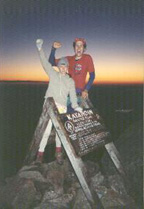
Out of the blue is used to describe something that hits you out of nowhere. It also describes the storm that nearly killed my wife, Victoria, 18 years ago.
The cloudless cobalt sky overhead had our spirits soaring after hiking for eight straight days in the rain. Victoria and I were 960 miles into our thru-hike of the Appalachian Trail. We had both made peace with the fact that our trek would test our will power with day after day of rain every once in a while. But, we had been slogging over mountains in a steady rain for more than 100 miles and we were glad to have a break from it.
After a lunch break at Rod Hollow Shelter, we tossed on our packs and marched off to Sawmill Spring, our destination for the night. The wind picked up almost immediately and the temperature began to drop. Within an hour after lunch, lightning boomed close by to announce the thunderstorm that would soon reach us. Accustomed to hiking in the rain, we always kept our pack covers at the ready. Barely slowing down to stop, we covered each others packs and hiked on. We didn’t wear rain coats, rain pants or ponchos as they would only make us sweat. We planned on letting our shorts and T-shirts get wet and changing when were cocooned in our semi-dry tent.
Fat drops of rain exploded on the pack covers as soon as we could get them on. Spirits dampened, but otherwise undeterred, we picked up the pace to get to our campsite sooner.
The rain continued to pelt us, the big drops coming so fast and furious, that it sometimes made it difficult to see the trail ahead. As we forged ahead, the flashing and crashing of thunder and lightning kept our pace quick.
When we reached Sawmill Spring, the campsite was standing in more than a half inch of water. Unable to pitch our tent, we splashed through puddles in the cold rain and continued north. We topped an exposed ridge where the trail was choked with briars. Tiny thorns etched a path through our wet legs as we slowed to push our way through the undergrowth. A brilliant white flash and simultaneous deafening boom just ahead stopped us in our tracks. Through the pouring rain we could see that a tree alongside the trail, just down from the ridge, had been ripped apart by lightning. It wasn’t long before we climbed over the new “blow down” as we followed the white blazes and evacuated the ridge.
We continued climbing and descending small hills until the trail was severed by an unlikely obstacle. A normally docile stream, that doesn’t rate a mention on maps or guidebooks, had been flash flooded into a raging torrent. Eight feet across and too deep to see the bottom, the swift current was a force to be reckoned with. Bowing to the greater power of the water, we searched for a better ford.
Upstream, the channel was narrower, creating a deeper, faster stream to wade. We looked downstream, but it was almost immediately intersected by another small creek that added more water to the already overflowing stream. We went back to the trail and considered waiting out the storm. Not only was the prospect of sitting out the rain depressing, but we were wet and getting colder by the minute. Our shriveled fingers were aching from the cold that was seeping into our bodies.
A few feet downstream from the trail, a tree had fallen across the stream. The foot-wide trunk sat a good foot and a half over the water, offering a tempting bridge. Victoria and I decided that the downed tree offered the best prospect for crossing and I stretched out on the trunk. With my belly squashed against the tree, I began to shinny across the creek. My feet were still on the bank when the water began pushing against my knees. I tried several positions, but couldn’t keep my whole body out of the water and on the log. I was sure to be pulled under the log by the current. Giving up on that approach, I crawled back up on the bank for another look.
I decided the direct approach was the only way to go. I unfastened my hip belt in case I was pulled under and needed to ditch my pack and waded into the water. I faced downstream and grabbed hold of the tree I had just tried to crawl on and slowly sidestepped my way across. About three feet before I reached the opposite bank, I reached the deep, narrow streambed that was now overfilled. The strong current began pushing against the bottom of my sleeping bag and caused my feet to slip. Clinging to the downed tree for balance, I regained my footing and crawled out on the bank.
Without hesitating, Victoria unbuckled her pack, stepped into the knee deep water and grabbed the log. The water quickly got deeper as she crabbed her way across the creek. The water was waist deep when she hit the streambed. Victoria’s trash bag covered sleeping bag was submerged and the water used it like a sail to push against her. I wrapped my arm around the nearest tree, a small dogwood, and reached my hand out to her.
“Grab my hand and I’ll pull you out,” I yelled over the cacophonous symphony created by the creek, rain and thunder. She looked up at me with relief and reached out an arm. Her weight shifted and her feet lost their purchase on the streambed. A rock rolled out from under her and she began to be pulled under the log. I strained with all my might to pull her up on to the bank, but she still hadn’t let go of the log with her other arm.
“Let go and I’ll pull you up,” I screamed.
“I can’t,” she called back.
I kept a tight grip on her arm, not wanting her to be swept under the tree and into the tangle of branches the blowdown had created downstream. In the fraction of a second that passed, I remembered clearly the devastating story of Alice Ferrence drowning in the Kennebec River in Maine during her attempted thru-hike with her husband. I didn’t know how I could pull her out, but I knew I couldn’t let go.
“Let go,” she yelled, “the current is breaking my leg.”
The indecision didn’t last long, it couldn’t. I simply couldn’t pull her up, so I let her go.
The current pushed her deeper into the water, but she bear hugged the tree and fought the streambed for better footing. I kept my hand out and watched as she got a better footing, pushed herself off the bottom and grabbed my hand. I yanked her up on the bank and we both gasped for breath in the cold downpour.
We didn’t talk. There was nothing to say. We buckled our packs and hiked on. In another half hour, the rain slackened and then stopped. We trudged on to Bears Den Hostel, an American Youth Hostel right on the trail. By the time we got there, not only had the rain stopped, but the sky was once again blue. The hostelkeepers were not at home and it was a short hike down the hill to Virginia Highway 7 in Snickers Gap. As chance would have it, we were only about 15 miles from Victoria’s father’s house, so we decided to go to the road and hitchhike to some creature comforts.
During the half mile between Bears Den and the highway, I began to feel angry about the blue sky. Here we were back in the safety of a developed area and it was as if nothing had happened. Sure the ground was wet from the recent downpour here too, but gone was the threat of lightning and the flash flooded creek. We were going to try to hitch a ride, and anyone driving by in the climate controlled comfort of their car would have no idea that I had just felt I was in a life and death struggle with nature.
We quickly got to the road, shucked our packs and stuck out our thumbs. Even soaked to the skin, or more likely because we were, it didn’t take long for us to get a ride in the back of a pickup truck. “Ya’ll weren’t out hiking in that mess were you?” the driver asked rhetorically. We told her that we wanted to bail out to Victoria’s father’s and she offered to go out of her way to take us to a convenience store in the next town so that we could call for a ride.
We didn’t get far before all of the traffic had to detour around a flooded section of highway. The days of rain followed by the flash flood had taken its toll on the highway as well as the trail.
That night, we saw on the news the damage done by the storm. It was somehow gratifying to know that we weren’t the only ones to be effected. It assured me that the pounding rain wasn’t the personal assault I had pictured. The storm would have been there whether we were on the trail or not. It was up to us to be prepared to take care of ourselves.
Looking back on it from the comfort of my home office years later, It still scares me. I could be reminiscing about how Victoria died in that storm instead of remembering how we made it. I remember having to let go of my grip and watch her kick against the bottom to regain her footing. And I remember that it worked. The creek bottom held firm, she reached up and took my hand and was soon panting for breath on the bank beside me.
 So where is your theology on this? I don't think it was some vast cosmic plan waged against by a vengeful god that led to our life or death struggle in the creek that day. Whether it was caused by a butterfly flapping its wings over China or a clash of warm and cold fronts, the outcome was the same. I know that God was with us in the midst of that struggle rather than either working behind the scenes to make it happen or watching idly from afar. What do you think?
peace,
Frank+
The Rev. Frank Logue, Pastor + King of Peace Episcopal Church
posted by King of Peace @ Thursday, August 31, 2006
3 comments


 But she further pointed out that this must be a glimmer of what it was like to hear that science was now saying the world is round not flat or that the earth revolves around the sun, not all the heavens around the earth. So to be a Pluto hugger, makes me a bit of a neo-flat earther. Yet while the earth is demonstrably round not flat, that ball of rock and ice we have called the planet Pluto orbits unphased by its 76-year run as one of the 9 planets in our solar system.
 The point of following Jesus isn't simply so that we can be sure of going to a better place than this after we die. Our future beyond death is enormously important, but the nature of the Christian hope is such that it plays back into the present life. We're called, here and now, to be instruments of God's new creation, the world-put-to-rights which has already been launched in Jesus and of which Jesus' follower's are supposed to be not simply beneficiaries but also agents.




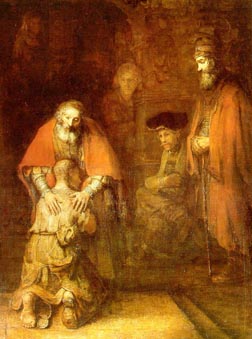 Do you also wish to go away? Peter’s response is striking. He doesn’t say yes, of course, but he doesn’t quite say no either. Instead, in good Jesus-style, he answers back with another question: To whom else can we go? It is not, perhaps, the most flattering answer in the world, but it is honest. It’s a little reminiscent of Winston Churchill’s famous description of democracy as the worst form of government except for every other form that has ever been tried. Following Jesus may not always be easy or pleasant, or even totally comprehensible, but when it comes to the eternal-life business, to tell the truth there’s not much out there in the way of alternatives.




 The correct perspective is to see following Christ not only as the necessity it is, but as the fulfillment of the highest human possibilities and as life on the highest plane. It is to see, in Helmut Theilick’s words, that “the Christian stands, not under the dictatorship of a legalistic ‘You ought’, but in the magnetic field of Christian freedom, under the empowering of the ‘You may’.”
 How do you picture The Holy Spirit? In the Hebrew Bible, the word ruach means wind, breath and spirit. And it is this ruach of God which hovered over the waters in creation as shown in the stained glass window above the altar at King of Peace.
 I have received letters and calls from people about this conflict, and people are asking "What can I do?" They feel helpless, they feel bewildered but they want to do something in response to the suffering that they have been watching on their televisions, hearing on their radios and reading in their newspapers.
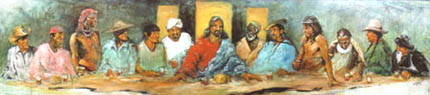
 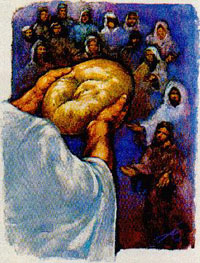 Here the language of eating the flesh and drinking the blood of Christ becomes graphic and specific. The Greek verb for "eat" changes from a generic term for eating (which might be understood symbolically as well) to a specific verb meaning "to chew upon" which could only be interpreted literally. The meaning of the teaching for the gospel's audience: Those, and only those, who gather to offer the Eucharist and so receive the blessed and transformed bread and wine have eternal life. Indeed, the gospel commends this is the means, par excellence, of abiding in Jesus Christ (verse 56).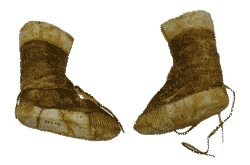
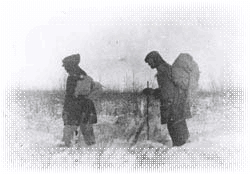 He and his companion Charles F. Johnson, set out on a 500 mile trek through dense bush over a steep mountain divide with provisions for 8 days though they expected to complete the trip in five days. The two ended up with no guides and decided they knew the way well enough. The weather turned severe and the two made as little as five miles progress a day before opting for a shorter route directly across the mountains.
 The Discovery Channel's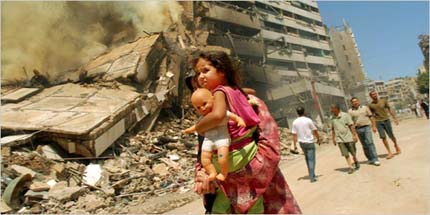




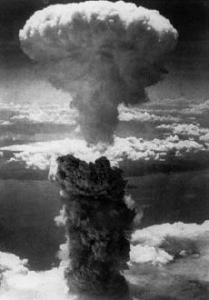 August 6, 2006 reminds us that sixty-one years ago flyers of the U.S. Army Air Corps dropped an atomic bomb on the city of Hiroshima, Japan—a profoundly dramatic event that forever changed the world. This cataclysm released such energy that a blue sky was transfigured into a blinding white light of an intensity never before witnessed...
 As we remember August 6, 1945, always the image of the mushroom-shaped cloud comes to consciousness. But Christians who remember that August 6 is the Feast of the Transfiguration know, too, that another cloud overshadows the mushroom-shaped one. It is the cloud of the mountain from which the voice of God reminds us that Jesus is God’s chosen one to whom we must listen.
 Mr. Boyd says he is no liberal. He is opposed to abortion and thinks homosexuality is not God’s ideal. The response from his congregation at Woodland Hills Church here in suburban St. Paul—packed mostly with politically and theologically conservative, middle-class evangelicals—was passionate. Some members walked out of a sermon and never returned. By the time the dust had settled, Woodland Hills, which Mr. Boyd founded in 1992, had lost about 1,000 of its 5,000 members.







3 Comments:
At 8/31/2006 3:12 PM, Victoria said…
Oh I can say, DEFINITELY, that God was with us and always is with us. Sometimes, though, we are just too deaf, dumb or even tough-skinned to feel that presence.
At 9/01/2006 9:36 AM, Anonymous said…
God is definitely with us all the time. Seems we have to have everything just so for our little visits with God - you know, the right clothes, the right church, etc - when we really need to get comfortable with knowing that he really does see everything. Even when we'd rather he didn't!Awnr
At 9/04/2006 12:46 AM, Terrell said…
I have heard you tell this story before but I hadn't thought of it in years. Wow! We're glad you made it through, Victoria!
I am enjoying your blog, Frank.
Post a Comment
<< Home