Irenic Thoughts

Irenic. The word means peaceful. This web log (or blog) exists to create an ongoing, and hopefully peaceful, series of comments on the life of King of Peace Episcopal Church. This is not a closed community. You are highly encouraged to comment on any post or to send your own posts.

3/21/2010

To Love What You Command

One of the great Prayer Book collects asks God that we may 'love the thing which thou commandest, and desire that which thou dost promise.' That is always tough, for all of us. Much easier to ask God to command what we already love, and promise what we already desire. But much less like the challenge of the Gospel.
~N.T. Wright

Wright is quoting the prayer we used in today's worship, which in contemporary language reads:
Almighty God, you alone can bring into order the unruly wills and affections of sinners: Grant your people grace to love what you command and desire what you promise; that, among the swift and varied changes of the world, our hearts may surely there be fixed where true joys are to be found; through Jesus Christ our Lord, who lives and reigns with you and the Holy Spirit, one God, now and for ever. Amen.

Labels: , ,

0 Comments:

Post a Comment

<< Home

6/30/2009

To Live With That Text Uncomfortably

“I take it as a method in my biblical studies that if I turn a corner and find myself saying, ‘Well, in that case, that verse is wrong’ that I must have turned a wrong corner somewhere. But this does not mean that I impose what I think is right on to that bit of the Bible. It means, instead, that I am forced to live with that text uncomfortably . . . until suddenly I come round a different corner and that verse makes a lot of sense”
—The Rt. Rev. N.T. Wright in a 1991 article, “How Can the Bible Be Authoritative?”

Labels: ,

1 Comments:

Post a Comment

<< Home

6/25/2009

What the Word "God" Means

“My proposal is not that we understand what the word ‘god’ means and manage somehow to fit Jesus into that. Instead, I suggest that we think historically about a young Jew, possessed of a desperately risky, indeed apparently crazy, vocation, riding into Jerusalem in tears, denouncing the Temple, and dying on a Roman cross--and that we take our courage in both hands and allow our meaning for the word ‘god’ to be recentered around that point.”
—The Rt. Rev. N.T. Wright, Bishop of Durham

Labels: ,

0 Comments:

Post a Comment

<< Home

2/06/2009

A Five Act Play

We can understand the Bible best if we read it as a five-act play, the five acts being Creation, Fall, Israel, Jesus and Church. We are not living in an unfallen creation; or in a fallen world without promise; or in the time of Israel BC; or, indeed, in the time of Jesus himself.

We are living in the fifth act, and have to improvise, under the guidance of the Spirit, in such a way as to bring this narrative—not some other one!—to its appointed and proper conclusion. In other words, to implement the achievement of Jesus and thus to anticipate the promise of new heavens and new earth.
The Rt. Rev. N.T. Wright (1948- )

Labels: ,

0 Comments:

Post a Comment

<< Home

1/29/2009

What "God" Means

James B. Janknegt's Crucifixion at Barton Creek MallMy proposal is not that we understand what the word ‘god’ means and manage somehow to fit Jesus into that. Instead, I suggest that we think historically about a young Jew, possessed of a desperately risky, indeed apparently crazy, vocation, riding into Jerusalem in tears, denouncing the Temple, and dying on a Roman cross—and that we take our courage in both hands and allow our meaning for the word ‘god’ to be recentered around that point.
The Rt. Rev. N.T. Wright (1948- )

Labels: ,

0 Comments:

Post a Comment

<< Home

9/26/2008

Faith in the Economy?

Avarice.
Inordinate pursuit of wealth or material things.
Theft, dishonesty, misrepresentation, or sharing in stolen goods.
Cheating in business, taxes, school or games.
Making worldly success the goal of our life
or the standard for judging others.
—from St. Augustine's Prayer Book


Over at Newsweek/The Washington Post's On Faith Forum, the panelists answered the question
Are the economy's recent financial failures also moral failures? Are credit and debt religious issues? Do you have faith in the economy?
Bishop N.T. Wright has responded in part,
Certainly the way the 'debt culture' has spiraled -- remember that credit cards and the like are a very, very recent invention, and that the idea of 'taking the waiting out of wanting' was, until very recently, widely regarded as a sign of moral degeneracy -- is a major index of societal ill-health, in which, as with lotteries, the poor are effectively taxed by the rich while the rich tell them 'aren't you having fun!'.

This isn't a diagnosis; it's a signpost towards one. Nor do I have a remedy lying ready to hand. What does 'repent and believe' mean in this situation? I'm not exactly sure; but I do know that it will involve cheerful generosity. Giving money away is the first great step towards dethroning it as an idol. As long as we are a culture of mammon-worshippers we can expect, quite literally, to pay the price that idols always demand.
The Rev. Jim Wallis responded:
The American economy is often rooted in unbridled materialism, a culture that continues to extol greed, a false standard of values that puts short-term profits over societal health, and a distorted calculus that measures human worth by personal income instead of character, integrity, and generosity....

The behavior of too many on Wall Street is a violation of biblical ethics; the teachings of Christianity, Judaism, and other faiths condemn the greed, selfishness, and cheating that have been revealed in corporate behavior over decades now and denounce their callous mistreatment of employees. Read your Bible.

The strongest critics of the Wall Street gamblers call it putting self-interest above the public interest; the Bible would call it a sin.
See all of the panelists responses here: Faith in the Economy.

At the household level
I think a term like "faith in the economy" is preposterous. The Psalmist wrote, "Some trust in chariots, and some in horses: but we will remember the name of the LORD our God" (Psalm 20:7) referring to the major weapons of mass destruction of their time. Some put their faith in military might, others in the economy. We are to put our faith in God. Jesus warned that it would be mighty tough to serve God and wealth. He was right. I don't know how to solve the national and international problems of the economy. But, I do know how to govern the economy of my household following Jesus' teachings. Placing God first, and giving of my first fruits to him (meaning I give when the money comes in, not when I see what is left), I give the 10% I see in scripture. Then, we live simply enough on what remains to not be beyond our means. I have yet to find my bank accounts running over, but I also have yet to find them empty.

What do you think?

peace,
Frank+
The Rev. Frank Logue, Pastor

Labels: ,

5 Comments:

  • At 9/26/2008 9:19 AM, Anonymous Anonymous said…

    Thanks for this post, I have been pondering on this for a while.

    My situation may or may not be typical of some readers here. I work but am not allowed to keep any of the money I earn, I am given what could be considered an allowance. From this I give a fixed amount each week to the church.

    My question, is this enough? If I’m not at service for some reason that week I double up the next week. I feel I should give every week not just when I attend.

    I don’t feel I am giving enough!! I do try to make up for this by working in different ministries with the church when I am able.

     
  • At 9/26/2008 2:54 PM, Anonymous Anonymous said…

    We always double if our family misses service one week too.Father Frank told me that was acceptable.

    It sounds like you are giving what you are able from your own source of income and your heart. I know that time and talent count for something too! Actually they count for a lot.:)

     
  • At 9/26/2008 11:16 PM, Blogger The Bosom Serpent said…

    Of course credit and debt are religious and moral issues. We are called to be good stewards.

    Remember the rich young ruler who could do everything to be righteous except selling everything he had. And I do believe it is easier to put a camel through a needle's eye than it is for a rich man to make it to heaven.

    I believe that being the possessor of great wealth removes us from reality. Those in need fade into the background as the pursuit of wealth holds the throne. Only by going out and purchasing food or fuel do we feel the sting of much higher prices.

    Great wealth can lead to rampant materialism where we start to love things and use people instead of using things and loving people.

    You are absolutely right that we are to place our faith in God. Faith in anything else is sure to be a rough path. Ultimately money cannot satisfy. It might buy you a nicer car to drive to church or a nicer suit to wear in church or let you feel important, impressed by your own delusions.

    How did Christ live? Did he accumulate wealth? The first shall be last and the last shall be first.

    I'm not sure I said what I set out to say so please pardon my mental meandering. It tends to happen more often all the time.

     
  • At 9/27/2008 2:58 PM, Blogger King of Peace said…

    Jesus pointed at the widow who gave two coins, worth what would be a fraction of a penny to us and said that he gift far out shone that of others give much larger sums. Our Lord knows well that some give small amounts from their smaller incomes and other give larger amounts from their great ability to give and it can all the same. Giving as you can joyfully is great.

    Making up for weeks away when you get back is exactly what I do. It amounts to the same as giving weekly.

     
  • At 9/29/2008 8:47 AM, Anonymous Anonymous said…

    Thank You


Post a Comment

<< Home

2/13/2008

Life after life after death

Time carries an article in which noted New Testament scholar and Anglican Bishop of Durham N.T. Wright tries to set the record straight on heaven. He says,
Our culture is very interested in life after death, but the New Testament is much more interested in what I've called the life after life after death — in the ultimate resurrection into the new heavens and the new Earth. Jesus' resurrection marks the beginning of a restoration that he will complete upon his return. Part of this will be the resurrection of all the dead, who will "awake," be embodied and participate in the renewal. John Polkinghorne, a physicist and a priest, has put it this way: "God will download our software onto his hardware until the time he gives us new hardware to run the software again for ourselves." That gets to two things nicely: that the period after death is a period when we are in God's presence but not active in our own bodies, and also that the more important transformation will be when we are again embodied and administering Christ's kingdom.
The full article is here: Christians Wrong About Heaven, Says Bishop.

Labels: ,

3 Comments:

  • At 2/13/2008 3:00 PM, Anonymous Anonymous said…

    The thought of being "downloaded"...I was hoping to escape technology when my "time" comes!:)

     
  • At 2/14/2008 6:52 AM, Blogger goodfornowt said…

    Am I the only reader who can make no sense of this talk of living after death, and feels that the Church has more important things to do here and now?

     
  • At 2/14/2008 7:08 AM, Anonymous Anonymous said…

    Goodfornow,

    You just may be, for this is the Lenten season where we prepare for Jesus' death and RESURRECTION. Jesus taught about life after death and eternity in the Kingdom with our Father.


Post a Comment

<< Home

9/13/2007

God's Wrath

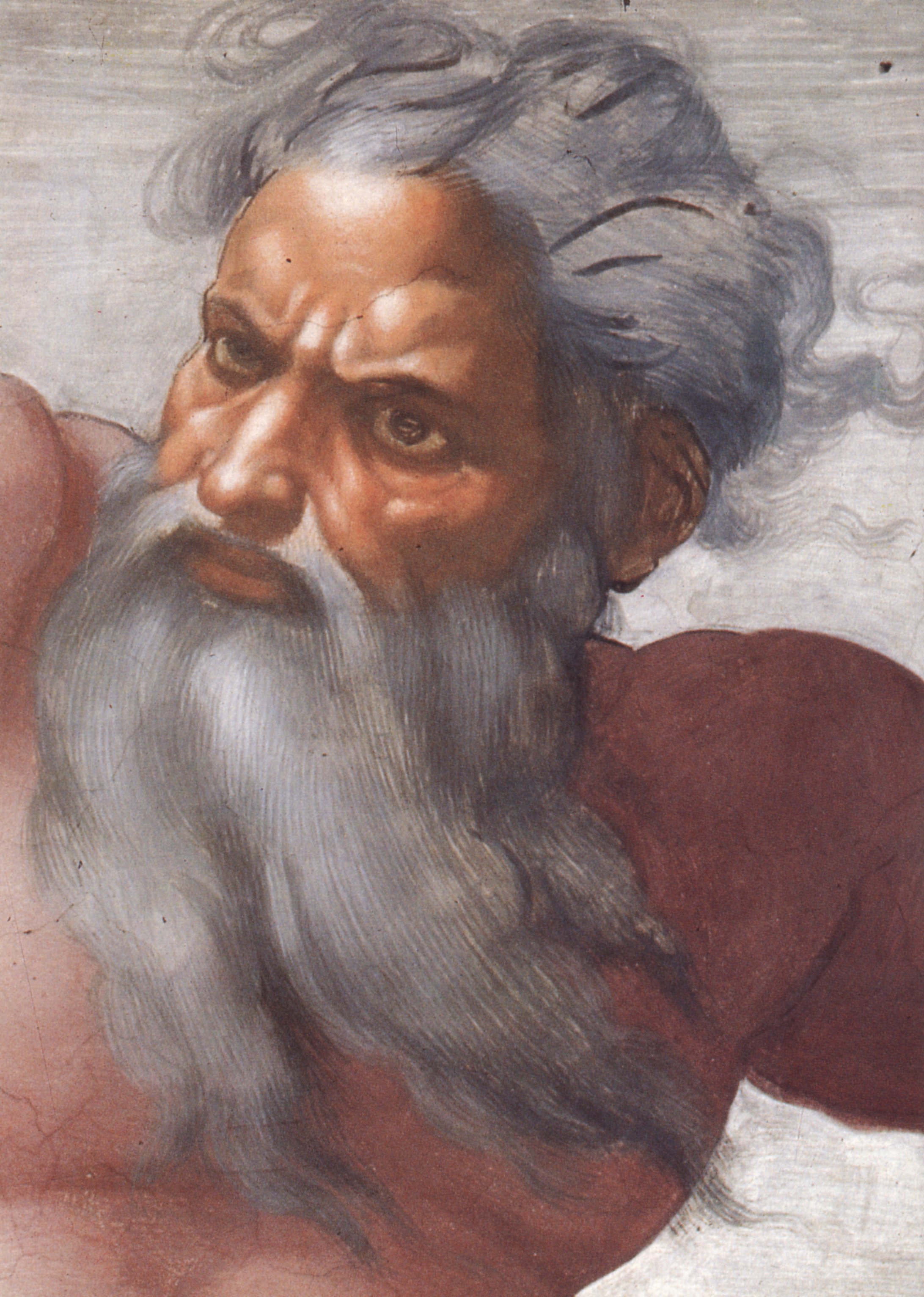
Michaelangelo's paintingThe biblical doctrine of God’s wrath is rooted in the doctrine of God as the good, wise and loving creator, who hates — yes, hates, and hates implacably — anything that spoils, defaces, distorts or damages his beautiful creation, and in particular anything that does that to his image-bearing creatures. If God does not hate racial prejudice, he is neither good nor loving.

If God is not wrathful at child abuse, he is neither good nor loving. If God is not utterly determined to root out from his creation, in an act of proper wrath and judgment, the arrogance that allows people to exploit, bomb, bully, and enslave one another, he is neither loving, nor good, nor wise.
—N.T. Wright

Labels:

2 Comments:

  • At 9/13/2007 7:29 AM, Anonymous Anonymous said…

    I don't agree. The God I worship is full of love. Love is the opposite of hate. I think that God is sorrowful and hurt in the face of these adversities. If he were hateful or wrathful, then we would not be dealing with abuse, prejudic, exploitation, etc..He would have already driven them away with his wrath, just as we humans are trying to do with our hatred and wrath. So far, I see that doesn't work.

     
  • At 9/13/2007 11:21 AM, Anonymous Anonymous said…

    To quote Frank, "I think it's more complicated than that."

    I don't think love and hate is an either/or choice. God, in his love, has provided a way to counter the evil in this world. He loves us enough to allow us the freedom to choose - and that includes the freedom to choose to do evil.

    When my children are disobedient, I don't hate them - I still love them more than my own life - but I may be angry about the things they do. I don't behave hatefully or maliciously to them, but correcting them is still necessary. Sometimes that means punishment, and sometimes it means that they reap the consequences of their own behavior.

    Unfortunately, in our human condition, we associate hate with visiousness and maliciousness. I believe God's example is a different than the words we use to express hate and anger. They're just the closest language that we possess. For us, hate and love make no sense.

    Gratefully, God hated what happened to his creation so much that he sent Jesus to rescue us. Once again, God did not behave as people do, but did something unexpected and holy.


Post a Comment

<< Home

5/11/2007

The Wrath of God

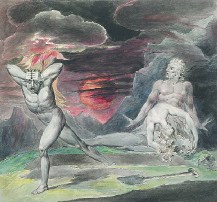
William Blake's painting of Cain fleeing from GodThe biblical doctrine of God’s wrath is rooted in the doctrine of God as the good, wise and loving creator, who hates — yes, hates, and hates implacably — anything that spoils, defaces, distorts or damages his beautiful creation, and in particular anything that does that to his image-bearing creatures. If God does not hate racial prejudice, he is neither good nor loving. If God is not wrathful at child abuse, he is neither good nor loving. If God is not utterly determined to root out from his creation, in an act of proper wrath and judgment, the arrogance that allows people to exploit, bomb, bully, and enslave one another, he is neither loving, nor good, nor wise.

—Bishop N.T. Wright of Durham, England quoted at A New an Unending Kind of Life

Labels: , , , ,

0 Comments:

Post a Comment

<< Home

4/22/2007

A startling new beginning

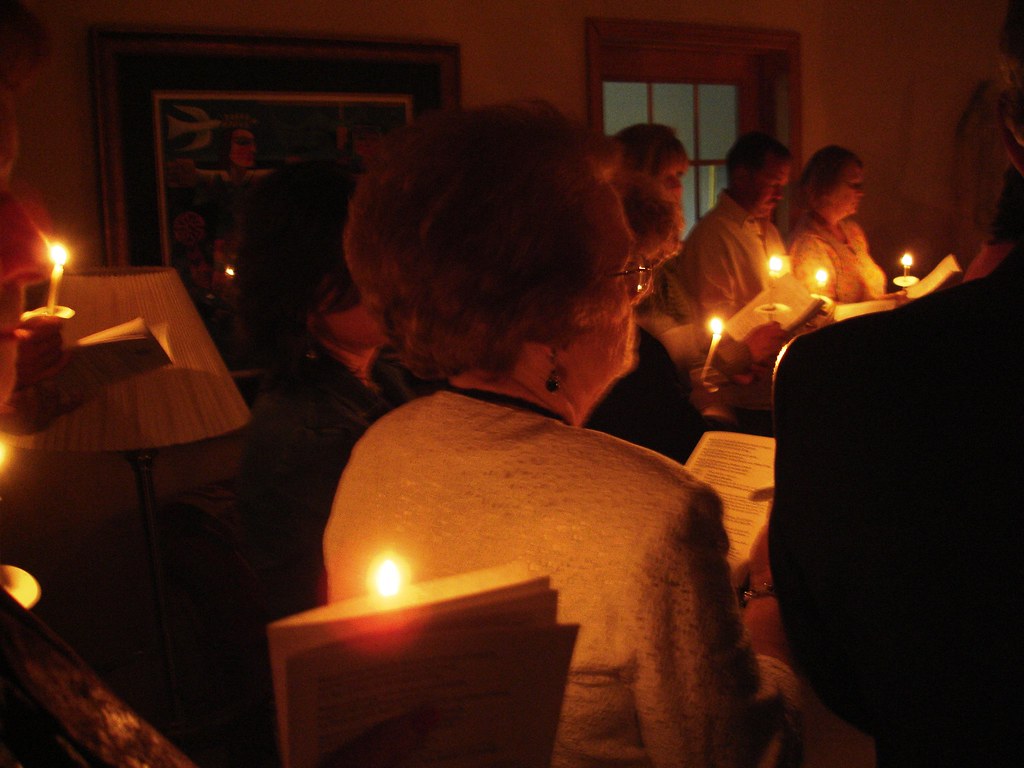
The Easter Vigil at King of PeaceToday is the third Sunday of Easter and as our celebration of Jesus' resurrection continues here are some thoughts of N.T. Wright, Bishop of Durham, England, written for The Guardian on the resurrection:

If you frame Easter in the terms of the perceived problem, you belittle it. Whether you think in terms of pie in the sky (at best a thoroughly subChristian concept) or a better society, all you get is a happy ending after a sad or sinful story.

And whatever Matthew, Mark, Luke and John were doing in writing the final sections of their books, they were not telling the story of Jesus's resurrection as a happy ending. They were telling it as a startling new beginning. Easter morning isn't a slow, gentle waking up after the difficult operation. It's the electric shock that brings someone back to life in a whole new way.

That's why the Easter stories tumble out in bits and pieces, with breathless chasings to and fro and garbled reports - and then, stories like nothing else before or since. As the great New Testament scholar EP Sanders put it, the writers were trying to describe an experience that does not fit a known category. They knew all about ghosts and visions, and they knew it wasn't anything like that.

Flowering the cross on Easter morning at King of PeaceEqually, they knew the risen Jesus wasn't just a resuscitated corpse, still less someone who had almost died but managed to stagger on after all. They had the puzzled air of people saying, "I know this sounds wacky, but this is truly how it was." They were stumblingly describing the birth of new creation, starting with Jesus but intended for the whole world.
The full text of his commentary is online here: Face to Faith.

Labels: , ,

0 Comments:

Post a Comment

<< Home